Dynamic Soaring Gliders
Dynamic soaring is not for the faint at heart. You see, hear, and feel the energy of the model as it thunders by nearly half the speed of sound !
The model screams by as extreme G-forces push its airframe to its breaking point. Pure adrenaline is pumping through your veins as the model gets faster and faster each pass!
No batteries, no motor, no propeller...
It's mind boggling how these gliders can harness nature's energy alone for reaching these insane speeds. Dynamic Soaring is also known as "DSing". It's definitely not they type of gliding that most of us are familiar with that's for sure...
How Does Dynamic Soaring Work?
Are you wondering how in the heck a motor-less glider can reach these insane speeds? I'll admit it sounds kind of far fetched the first time you hear about it. You may even have to see a video or two before you're a believer.
Dynamic soaring involves capturing the energy that exists between air masses with different wind velocities.
The famous Wandering Albatross stays in the air for days at a time without flapping its wings simply by harnessing the energy from the difference in wind speed from the oceans surface to the faster moving air above the oceans surface.
Instead of harnessing the energy , DS enthusiasts harness this energy for reaching unbelievably high speeds!
Picture a hill or slope with wind blowing over it, lets say at 35 mph. The wind is deflected upward by the slope. This is where the lift comes from for traditional slope gliding.
If you're standing at the bottom of the hill opposite the direction the wind is coming from, you wont feel the wind at all because the hill is blocking it right. So the air velocity is basically 0 MPH at the bottom of the backside of the hill (AKA the dark side).
So you have nice smooth laminar airflow of 35 MPH swooping upward over the hill, and 0 MPH air flow at the bottom of the backside of the hill. The border between these two air masses is a very turbulent area called the boundary layer.
Here's the trick...
The glider is launched into the wind where it picks up airspeed from the tailwind. It then turns downward through the boundary layer back towards the hill.
Since the airspeed is zero under the boundary layer, the glider looses very little energy because there is no headwind on its way back towards the hill.
The glider picks up speed from gravity, then turns back upward through the boundary layer into the direction of the wind where it picks up even more speed.
This process is repeated over and over gaining more energy each time.
In a nut shell, the model goes faster and faster each revolution until the energy lost from the turns is equal to the energy gained by the tail wind on the top side.
Good Places for Dynamic Gliding
Dynamic Soaring can't be done just anywhere. You'll need a hill that is steep on both sides and one that has a narrow ridge at the top.
The direction of the wind is also critical for creating the separation in air flows that is needed for dynamic gliding. Depending on the geography of your area, it could be very difficult to find a suitable site for DS'ing.
If you're lucky you will be able to find some people in your area
that have found the best slopes for you. Just ask around at your local flying club.
Sometimes these slopes are
relatively easy to get to. However, some of the best slopes may be
assessable only by a treacherous hike through the wilderness!
Slopeflyer.com has fairly comprehensive list of Soaring Sites throughout the US, many of which are suitable for Dynamic Soaring.
Models Capable of Dynamic Souring?
|
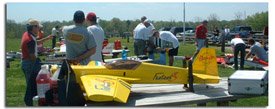
Most any RC glider can be used for getting started with DS'ing. As a general rule though, the faster you want to go the more expensive your model will be. At speeds approaching 400MPH you can imagine the extreme forces exerted on the airframe and control surfaces. |
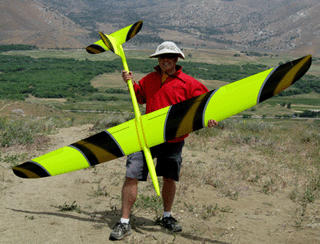 Photo: RCSpeeds.com |
In addition to an extremely strong airframe, high quality servos and linkages are also critical.
Some of the top end DS gliders will set you back over a grand!
RCSpeeds.com keeps track of the top speed records, best DS gliders, and the best DS'ing sites around the world wide. It's pretty much the "unofficial" official DS'ing organization if you will.
Dynamic Souring with Real Flight
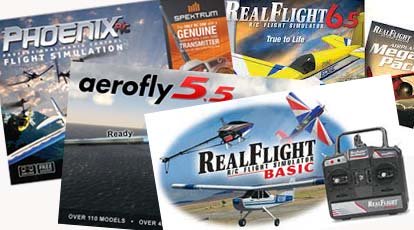
The best way to get started with DS'ing is to pick up a copy of Real Flight. As you can see in the below video, it provides arrows showing you how the different air masses are moving to help you identify the boundary layer.
Not only is this a cheap and quick way of getting started, it gives you a much better idea of what you're looking for when searching for the perfect Dynamic Soaring site. It also shortens your learning curve tremendously by helping you to identify the boundary layer.
Learn More about RC Gliders in General
Home > RC Gliders > Dynamic Soaring
Let’s Go Flying! |
|
5 Steps for Successful First Flight! When the RC bug bites, it bites hard! Control yourself my friend! Save yourself much time and money by following these five steps to success! |
|
Follow us on: |
 |
 |